
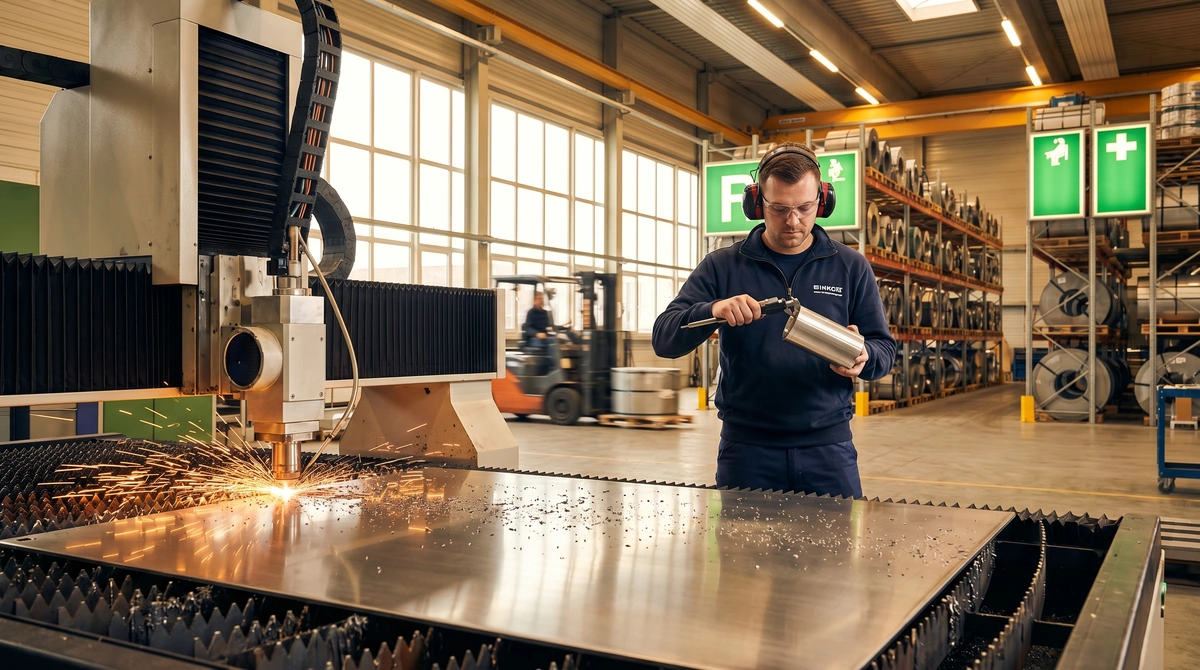
You just landed a $500,000 purchase order. Raw steel needs to ship Monday, payroll hits Friday, and your customer pays net-60. The math doesn’t work — unless you already know how manufacturing invoice factoring unlocks the cash trapped in your receivables.
Manufacturers live in a brutal cash cycle. Raw materials are due on delivery. Labor is due weekly. Equipment payments are due monthly. But your customers pay you on their schedule, not yours. Here’s how to keep the production line moving when your receivables are 60 days out.
Why Manufacturers Get Squeezed on Cash
Manufacturing is structurally a working capital business. You buy steel, resin, components, or subassemblies upfront. You pay shop floor labor every Friday. You lease CNC machines, tooling, and forklifts on fixed monthly terms. And then you wait — often 60 to 90 days — for your customer to cut a check.
Tier-1 automotive, aerospace, and industrial OEMs set the payment terms, and small-to-mid-sized manufacturers take them. That’s how you get into the squeeze: profitable on paper, broke on the operating account. According to the QuickBooks Late Payments Report, the average small business is owed $17,500 in unpaid invoices at any given time. For a mid-sized shop cutting $100K or $500K purchase orders, that gap is measured in millions.
Layer in 2026 tariff uncertainty on imported steel, aluminum, and electronics, and raw material costs can spike 10-25% with little warning. You need a financing tool that flexes with your order book — not a bank loan that took three months to close and doesn’t grow with you. Factoring works for every industry with slow-paying B2B customers — see our full breakdown in 5 Industries Where AR Financing Changes Everything.
How Manufacturing Invoice Factoring Works
Manufacturing invoice factoring is simple: you sell your unpaid B2B invoices to a factoring company at a small discount, and you get the cash within 24-48 hours instead of waiting 60 days. Here’s the four-step flow.
Ship the Order and Invoice Your Customer
You complete the build, deliver the goods, and send an invoice with standard net-30, net-60, or net-90 terms. Your customer accepts delivery.
Submit the Invoice to Your Factor
You send a copy of the invoice to the factoring company. They verify the goods were delivered and accepted — usually within hours for repeat customers.
Get Your Advance: 85-90% Wired in 24-48 Hours
The factor wires 85-90% of the invoice face value to your operating account. The remaining 10-15% is held as a reserve until your customer pays.
Customer Pays — Reserve Releases Minus Factor Fee
When your customer pays the factor in full, the reserve is released to you minus the factor fee (typically 1-3% of invoice face value per 30-day period).
Why does manufacturing qualify so easily? Because your invoices are clean — goods shipped and accepted are among the most reliable receivables a factor can buy, and your customers are usually well-capitalized OEMs, distributors, or retailers. For the full mechanics, read How AR Financing Works: The Complete Step-by-Step Blueprint.
What You Can Fund With Factored Cash
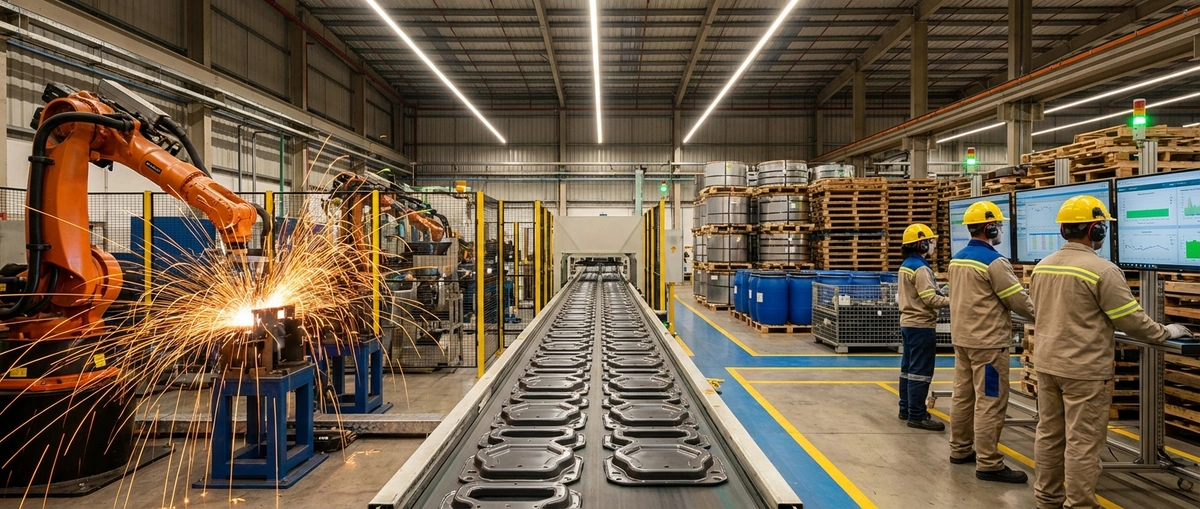
Once the cash hits your account, it spends like any other working capital — only faster. Here’s where manufacturers typically put it to work:
- Raw materials and inventory — steel, aluminum, resins, electronic components, and subassemblies needed for the next production run ($50K-$500K typical orders)
- Equipment repair and tooling — keep CNC machines, presses, and robotics running; replace worn dies and fixtures before a line-down event
- Seasonal production ramps — fund Q4 holiday builds, spring construction-season inventory, or back-to-school tooling without tapping a credit line
- Weekly payroll — cover shop floor wages, overtime, and benefits while customer payments are in float
- New customer expansion — say yes to a $1M OEM contract without giving up equity or waiting 90 days for the first payment
- Tariff cost absorption — fund the 10-25% price shock on imported inputs without passing it to customers mid-contract
Pro Tip
Pair invoice factoring with purchase order (PO) financing for pre-production needs. PO financing funds the raw materials before you ship; factoring funds the receivable after you ship. Used together, they cover your full cash cycle.
Manufacturing Invoice Factoring Terms at a Glance
Terms vary by factor, customer quality, and volume, but here’s what to expect for a typical mid-sized manufacturer:
| Term | Typical Range | What It Means for You |
|---|---|---|
| Advance rate | 85-90% | Cash hits your account within 24-48 hours of invoice submission |
| Factor fee | 1-3% per 30 days | Total cost to factor a $100K net-60 invoice: $2K-$6K |
| Minimum monthly volume | $50K-$100K | Smaller shops use spot factoring with no minimum |
| Concentration limit | 25-40% | Max share of factored invoices from one customer — diversify your book |
| Recourse type | Recourse or non-recourse | Non-recourse adds credit protection for ~0.5-1% more |
See the National Association of Manufacturers for current industry payment trend data.
The Real Math: A $250K PO From a Tier-1 Customer
Let’s put numbers on it. You ship a $250,000 order to a Tier-1 automotive OEM on net-60 terms. Here’s what manufacturing invoice factoring looks like in dollars.
At a 90% advance rate, the factor wires you $225,000 within 48 hours. The remaining $25,000 sits in reserve. Sixty days later, your customer pays the factor the full $250,000. The factor deducts a 2.5% fee for the 60-day hold — that’s $6,250 — and releases the rest of the reserve, $18,750, to you. Your total cost: $6,250 to get $225,000 two months early.
What did that $225,000 buy you? Enough steel to start the next PO on Monday. Eight weeks of shop floor payroll. A deposit on the new press brake you’ve been putting off. And the ability to say yes to the next order from that same OEM — because your working capital just doubled. Factoring isn’t free, but compare the cost to what you’d lose by turning the order down or funding it with a 50-150% APR merchant cash advance. The difference is why business financing with receivables is the default working capital tool in manufacturing.
Watch Out
Some factors use tiered pricing that adds fees every 15 or 30 days past submission. A “2%” headline rate can become 3-4% on a net-60 invoice. Always ask for the full fee schedule in writing and run the math on your actual payment terms before signing.
Keep the Line Moving
Manufacturing invoice factoring is the working capital tool built for your cash cycle. Your customers are creditworthy. Your invoices are clean. The only thing standing between you and the next production run is 60 days of float — and that’s exactly the gap factoring closes.
Stop funding growth out of pocket while your customers enjoy long payment terms. Turn your receivables into the working capital they were always meant to be.
Unlock the Cash Behind Your POs
Keep raw materials flowing, payroll funded, and production lines running — without waiting 60 days for your next customer payment. See what your invoices are worth today.